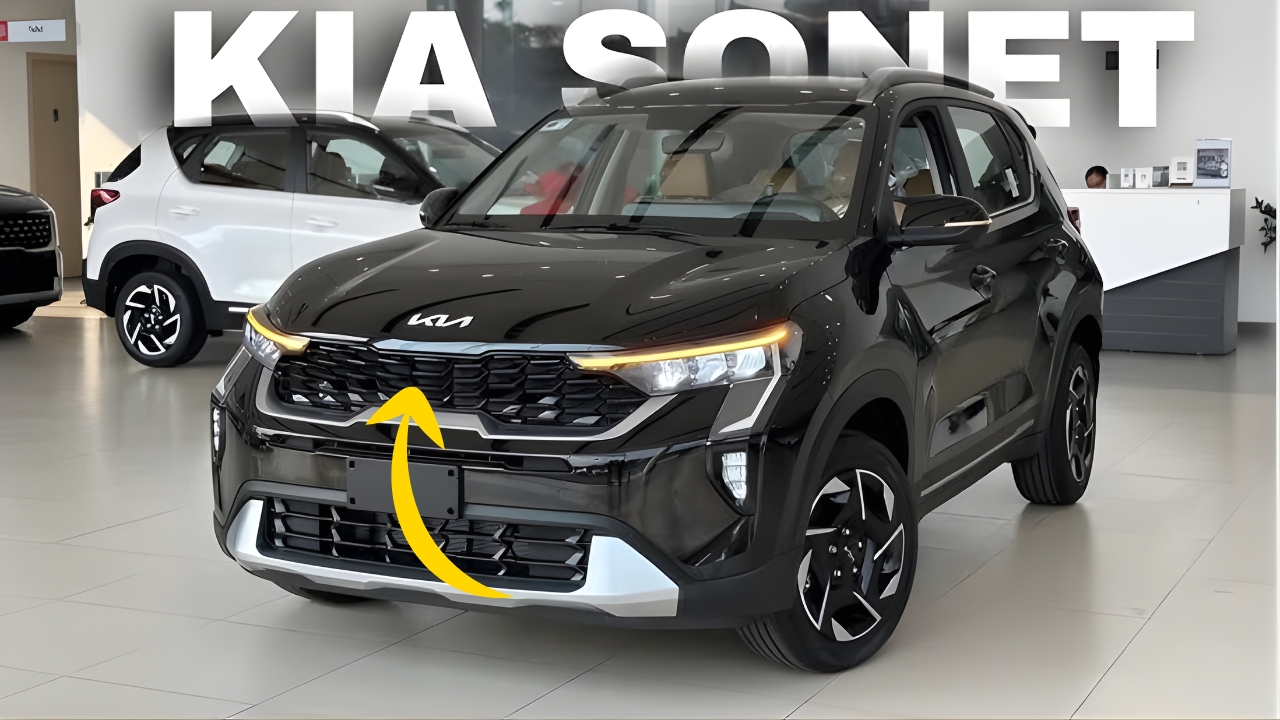
Kia Sonet 2026 : The Kia Sonet has just gotten a meaningful update for 2026, with Kia expanding automatic‑gearbox options and introducing a fresh new colour while keeping the compact SUV firmly in the ₹7.3–₹15 lakh bracket.
The MY26 Sonet is not a full‑blown facelift, but it does make the SUV feel more modern and accessible, especially for buyers who want a city‑friendly automatic compact SUV without paying crossover‑segment money.
What’s New in the 2026 Sonet
The headline for the 2026 Sonet is the widening of automatic‑transmission options, particularly in the sub‑₹10‑lakh bracket.
Kia has added automatic diesel and turbo‑petrol variants at lower‑tier trims, so now the Sonet automatic starts at roughly ₹9.78 lakh (ex‑showroom) for the HTE(O) diesel‑automatic model, bringing diesel‑automatics under the psychologically important ₹10‑lakh mark.
On top of this, Kia has introduced a new Magma Red exterior shade, joining the existing palette that includes Imperial Blue, Glacier White, Sparkling Silver, Aurora Black, and more.
The move gives buyers an extra “statement colour” option without raising prices, keeping the Sonet visually fresh against rivals like Tata Nexon, Hyundai Venue, and Maruti Brezza.
Also Read: Volkswagen Tayron Level 2 ADAS features SUV comes with 9 safety airbags, engine is powerful
Engine Options and Driving Experience
The Sonet 2026 continues with three powertrains: a 1.2‑litre naturally aspirated petrol, a 1.0‑litre turbo‑petrol, and a 1.5‑litre diesel, all tuned for a mix of performance and efficiency.
The 1.2‑litre petrol is the most budget‑friendly option, making around 82 bhp and working with 5‑speed manual only, ideal for first‑time buyers or those prioritising low upfront cost.
The 1.0‑litre T‑GDI turbo‑petrol brings 118 bhp and strong mid‑range torque, paired with either a 6‑speed iMT (clutchless manual) or a 7‑speed DCT automatic, giving a more lively feel for daily city runs and highway stretches.
The 1.5‑litre diesel produces 114 bhp and about 250 Nm, available with a 6‑speed manual or 6‑speed torque‑converter automatic, which is a strong draw for those who want relaxed cruising and low‑speed pulling power.
Also Read: Maruti Fronx Affordable price SUV comes with 20kmpl mileage, price is ₹6 Lakhs
Features and In‑Cabin Tech
Inside, the Sonet 2026 feels more premium than many rivals, especially on higher trims like HTK+, HTX, GTX, and GTX+.
These models now pack a dual 10.25‑inch digital cockpit and touchscreen infotainment, front‑seat ventilation, a sunroof, a 360‑degree camera, and even a Bose‑badged audio system on select configurations.
The SUV also offers ambient lighting, an air purifier, powered driver’s seat, and connected‑car features, depending on the variant and whether it belongs to the X Line, Tech Line, or GT Line family.
Safety has been stepped up too, with six airbags, ESC, VSM, hill‑start assist, and Level‑1 driver‑assistance aids on the top‑end GTX+ diesel‑automatic model, giving it a solid case in the feature‑rich compact‑SUV segment.
Kia Sonet 2026 Price, Variants and Target Buyer
In India, the Kia Sonet starts at around ₹7.3 lakh (ex‑showroom) for the base HTE petrol manual and climbs up to roughly ₹15.6 lakh for the fully loaded GTX+ diesel‑automatic variant.
Also Read: Kia Seltos 2026 comfortable features SUV with 1197cc engine, look is aggressive
The MY26 update now brings 27 variants spread across 8 core trims, including HTE, HTK, HTK+, HTX, GTX, GTX+, and special X Line and GT Line packages, so buyers can pick exactly what they want in terms of powertrain, extras, and styling.
Also Read This : Maruti Suzuki Brezza Aggressive design SUV comes with powerful engine, mileage is 18kmpl
The big win for Kia is that diesel‑automatic and turbo‑petrol‑DCT variants are now available from under ₹10 lakh on select trims, making the Sonet one of the most affordable automatic compact SUVs in the market.
For young professionals, young families, or anyone who wants a compact SUV with strong features, good mileage, and a modern look, the 2026 Kia Sonet looks like a highly balanced choice in the Nexon–Venue–Brezza bracket.